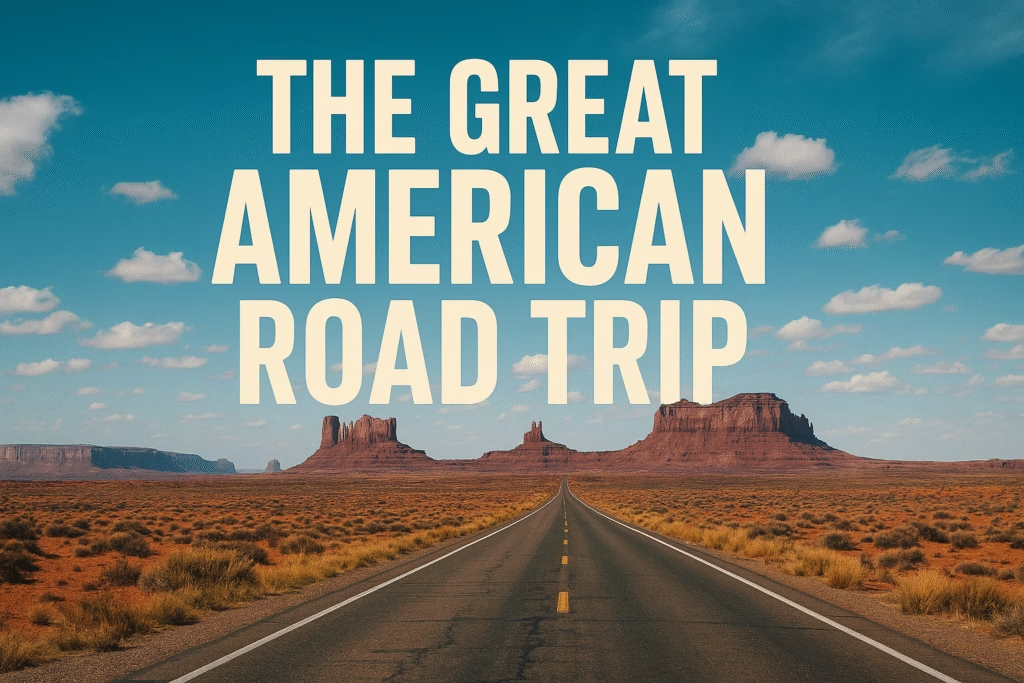
Introduction – The Call of the Open Road
It started with a map spread across the dining table, a half-packed bag, and the steady hum of excitement that only a road trip can bring.
For as long as I can remember, the idea of the open road — endless highways, shifting landscapes, and the freedom to stop wherever curiosity struck — had felt like a quiet dream waiting to happen.
So one morning, I packed my car, filled a playlist with songs that smelled like nostalgia, and drove away without an exact plan. All I knew was this: I wanted to explore America, one road at a time.
Road trips are more than just travel. They are a test of patience, an invitation to wonder, and a reminder that sometimes the best part of a journey isn’t where you arrive, but what happens between the miles.
Over the next few months, I drove coast to coast — from the misty shores of the Pacific Northwest to the golden beaches of Florida, through deserts, forests, cities, and sleepy little towns you won’t find on a map.
This is the story of that journey — and a complete guide to planning your own Great American Road Trip.
1. Why Road Trips Define the American Spirit
There’s something deeply American about packing your car and chasing the horizon. It’s in our movies, music, and memories. The open highway is more than asphalt — it’s a symbol of freedom.
Maybe that’s why Route 66 has become legendary — not because of its length, but because of what it represents: a trail of stories, diners with neon lights, and people chasing something beyond their everyday lives.
Every region of America has its rhythm.
The West sings in the voice of the ocean and redwoods.
The South hums with blues and barbecue.
The Midwest whispers comfort and kindness.
And the East speaks history in the hum of its cities.
On the road, you don’t just see America — you feel it.
The hum of tires, the scent of pine forests, the first taste of diner coffee after 200 miles. It’s all part of the adventure.
That’s why road trips remain the most authentic way to explore this vast country. You can plan routes, pick destinations, and still discover surprises every single day.
2. Planning the Perfect American Road Trip
Every great journey starts with good planning — and a bit of spontaneity.
Here’s how my trip began: with a notepad, Google Maps, and three questions.
- How much time can I travel?
- What’s my budget?
- What type of experiences do I want?
Once I answered those, the road unfolded itself.
If you’re planning your first big American road trip, here’s what you’ll need:
1. Pick your route wisely.
Do you want mountains, beaches, or desert landscapes? America has it all. For first-timers, routes like the Pacific Coast Highway, Route 66, and the Blue Ridge Parkway are perfect.
2. Prepare your car.
Before I left, I got my car serviced — oil change, brakes, and tires. I also carried a spare tire, jumper cables, and an emergency kit. You never know when a lonely stretch of desert might test your luck.
3. Budget for the unexpected.
Gas, food, and lodging add up. But so do surprises — a detour to a waterfall, or a night in a local motel that feels like a time capsule. Always keep a little extra cash.
4. Download essential apps.
Apps like Roadtrippers, GasBuddy, and Google Maps Offline were lifesavers. They helped me find scenic routes, cheap gas, and hidden attractions.
5. Plan for flexibility.
Some of the best places I discovered weren’t on my map — they were accidents. Don’t over-schedule. Leave room for the magic of the road.
3. The West Coast Wonder: From Seattle to San Diego
There’s something surreal about starting a journey in the misty green forests of the Pacific Northwest and ending it on the sunlit beaches of Southern California.
My trip began in Seattle, with a cup of coffee in one hand and the Space Needle gleaming above me. I took the I-5 south, tracing the spine of the coast.
In Oregon, every mile was a postcard. The smell of pine, the sound of waves against rugged cliffs, and roadside coffee shacks that felt like home. I stopped at Cannon Beach, where Haystack Rock rose like a giant in the fog.
Crossing into California, I followed the legendary Pacific Coast Highway (Highway 1) — a road that doesn’t just show you the ocean, it makes you fall in love with it.
I drove through redwood forests so tall they made my car feel like a toy. In San Francisco, the Golden Gate shimmered under the sun, and I walked across it with the wind whipping through my hair.
Further south, Big Sur stole my heart. The cliffs, the endless Pacific, and that dreamlike fog rolling in at sunset — it felt like a movie I never wanted to end.
By the time I reached Los Angeles, I’d met surfers, artists, and dreamers — all chasing different kinds of freedom. And when I finally reached San Diego, I realized something simple: the road had already changed me.
Part 2: The Southwest Magic – From Las Vegas to Santa Fe
The desert has its own kind of silence. It’s not empty — it hums softly, as if whispering stories from another time. When I left the cool Pacific breeze behind and drove east toward Las Vegas, the landscape began to shift. The trees disappeared, the colors changed, and the sky widened into infinity.
By the time I hit Nevada, I felt small — in the best way possible. The open desert does that to you. It strips away everything unnecessary until you’re left with only the essentials: your thoughts, your music, and the road.
1. Las Vegas – The City That Never Sleeps (Even When You Do)
Most people know Las Vegas for its neon lights, casinos, and endless nightlife — but for me, it was something else entirely. It was the starting point of my Southwest chapter.
I stayed just off the Strip, where the glitz faded into quiet neighborhoods and small taco stands. At night, I wandered down Fremont Street, where the air buzzed with music and laughter.
It’s strange — you can be surrounded by thousands of people in Vegas and still feel like you’re in your own little movie.
But after two nights of flashing lights and long walks under neon skies, I was ready for silence again. And I knew exactly where to find it.
2. Hoover Dam and Lake Mead – Engineering Meets Eternity
Leaving Las Vegas early in the morning, I drove toward Hoover Dam. The road curved through golden hills and dropped suddenly into one of the greatest human-made wonders in America. Standing there, between the massive concrete walls and turquoise waters of Lake Mead, I felt like I was seeing strength carved into stone.
The sun hit the canyon just right — the colors glowed like molten gold. I stood there for nearly an hour, watching the Colorado River snake its way through the desert, feeding life into an unforgiving land.
From there, I followed the old Route 66, a road that feels like time travel.
Rusting gas stations, forgotten motels, faded billboards — reminders of an era when road trips were simpler, slower, and somehow more romantic.
3. The Grand Canyon – The Earth’s Greatest Secret
You can see a thousand photos of the Grand Canyon, but nothing prepares you for the real thing. When I finally reached the South Rim, I just stood there in silence. It wasn’t just beautiful — it was humbling.
The canyon stretched endlessly, layers of red and orange telling stories from millions of years ago. I watched the sunset there, the sky bleeding into pinks and purples. It felt like time stopped — and maybe, for a few minutes, it did.
At night, the stars appeared one by one until the entire sky turned into a shimmering ocean. I slept in my car that night, windows open, heart full.
If you ever doubt how small you are — or how lucky — stand at the edge of the Grand Canyon. It will remind you.
4. Sedona – Red Rocks and Spiritual Roads
Driving from the Grand Canyon to Sedona was like entering another world.
The desert transformed into rolling red rock formations and wild cactus fields that looked hand-painted.
Sedona isn’t just a place; it’s a feeling. The town is famous for its “energy vortexes,” but even if you don’t believe in spiritual talk, you’ll feel something here — a kind of calm that wraps around you.
I hiked Bell Rock during sunset. The wind carried the scent of sagebrush, and the rocks glowed like fire. For a while, I just sat there, legs dangling over the edge, watching the desert breathe.
Later, I met a couple from Colorado in a local café. We talked about travel, freedom, and how road trips teach you to live with less. They said something I’ll never forget:
“When you drive through America, you don’t find the country — you find yourself in it.”
They were right.
5. Santa Fe – Where Culture Meets the Horizon
From Sedona, I drove east through dusty highways into New Mexico, where the colors of the land deepened into ochre and rust. The landscape felt alive — wild, untamed, ancient.
Santa Fe was a burst of culture and creativity in the middle of the desert. Adobe buildings glowed in the sun, and local artists filled the streets with paintings, pottery, and stories. The smell of roasted green chilies filled the air — spicy, earthy, unforgettable.
I spent three days wandering through its narrow streets, visiting old chapels, and eating more tacos than I’ll ever admit. At night, the desert air turned cool, and music drifted from open bars — country, blues, and Spanish guitars weaving together like old friends.
By the time I left, I realized something simple:
The Southwest isn’t about the destinations. It’s about the spaces between them — the quiet miles, the sunsets that set the sand on fire, and the strangers who become part of your story.
Travel Tips for the Southwest Route
(keeping Google SEO-friendly for readers planning similar trips)
- Best Time to Visit: March to May or September to November (avoid extreme summer heat).
- Recommended Route: Las Vegas → Hoover Dam → Grand Canyon → Sedona → Santa Fe.
- Ideal Duration: 7–10 days.
- Must-Try Food: New Mexico green chili, Navajo tacos, roadside diner pies.
Part 3 – The Heartland Drive & The East Coast Escape
5. The Heartland Drive – From Chicago to Denver
After the humid air of the South, the breeze in Chicago felt sharp and alive. Skyscrapers shimmered against Lake Michigan, and deep-dish pizza became my breakfast. Chicago was my reset button — the perfect starting line for the Heartland Drive.
Leaving the city, I watched it shrink in the rear-view mirror until it became only a glow on the horizon. Ahead lay endless prairies, tiny farm towns, and skies so wide they looked painted.
Small-Town America at 60 Miles an Hour
Driving through Iowa felt like flipping through postcards. Cornfields rolled by in golden waves, and every small town had a diner with a chalkboard menu and a waitress who called you “hon.”
In one such diner near Des Moines, an old man noticed my California plates. He sat across from me, sipped his black coffee, and said, “Don’t rush the middle, son. Everyone races through it, but this is where America breathes.”
I didn’t rush after that. I started pulling over for random roadside stands — selling fresh pies, old vinyl records, even handmade birdhouses. The heartland teaches you that wonder doesn’t always wear a big sign.
Kansas City – Where Barbecue Is a Belief
By the time I reached Kansas City, the scent of smoked ribs filled the air. I joined locals at a tiny joint with red-checkered tables. Strangers passed me napkins, and before I knew it, we were talking about football, family, and road trips.
Kansas City wasn’t a stop — it was a reminder that food connects faster than Wi-Fi.
Crossing Colorado – From Flatlands to Freedom
The flat roads eventually began to climb. The first sight of the Rocky Mountains rising from the distance nearly stole my breath. By the time I reached Denver, the city was bathed in evening gold.
I spent two days exploring — biking along rivers, sipping coffee in LoDo, and breathing that crisp mountain air.
But it was Rocky Mountain National Park that left me speechless. The switchbacks curled upward into snow-tipped peaks; elk grazed by the roadside; lakes mirrored the sky so perfectly that I couldn’t tell where the earth ended.
One night, parked under a sky thick with stars, I realized something:
Every road trip has a rhythm. The West had been wild, the South soulful, and the Midwest — it was honest. Pure, steady, grounding.
Heartland Route Tips
- Route: Chicago → Des Moines → Kansas City → Denver → Rocky Mountain NP
- Best Season: Late spring to early fall
- Duration: 6–8 days
- Don’t Miss: Kansas City BBQ, Des Moines farmers markets, Trail Ridge Road in Colorado
6. The East Coast Escape – From Maine to Miami
If the Midwest was quiet and grounding, the East Coast was electric.
It’s where history meets ocean breezes, where every few miles feels like turning a new chapter.
I started in Maine, the northern tip of this coast-long drive, where pine trees meet crashing Atlantic waves. I woke to the sound of seagulls and the smell of buttered lobster rolls — the perfect breakfast for a traveler chasing horizons.
New England Dreams
Maine led me south through New Hampshire and Massachusetts.
The roads were lined with maples, and the air smelled faintly of salt and autumn leaves. I stopped in Boston, where cobblestone streets carried centuries of stories. Sitting at Quincy Market, I watched college kids hurry past tourists and thought, “This is where America began — and somehow, it still feels young.”
Further south, New York City burst onto the map like a firework.
I parked outside Manhattan and took the subway in. The noise, the lights, the sheer pulse of the city made my heart race.
I walked the Brooklyn Bridge at sunset, surrounded by hundreds of people, yet somehow I felt perfectly alone — the good kind of alone that road trips teach you to love.
Washington D.C. – Where Streets Tell Stories
From New York, the road turned political and poetic. In D.C., every monument seemed to whisper: Remember who we are.
I spent a day wandering through the National Mall, watching cherry blossoms fall like pink snow. The Lincoln Memorial stood tall against the twilight, reflecting in the water like an old promise still kept.
The Southern Coastal Charm
As I moved deeper south, the pace softened again. Charleston welcomed me with pastel houses and oak trees dripping with Spanish moss. The people spoke slowly, smiled easily, and served shrimp and grits that could cure any homesickness.
Further down, Savannah, Georgia felt like stepping into a southern novel — ghost stories, cobblestone squares, and jazz from hidden courtyards.
One evening, I joined a small ghost tour just for fun, and halfway through, a thunderstorm rolled in. Rain poured, lightning flashed, and our guide kept telling stories as if nothing had changed. That’s the South — unbothered by chaos, always full of grace.
Miami – The Final Stretch
After thousands of miles, I finally reached Miami — the vibrant finale of my cross-country symphony.
The Atlantic shimmered like liquid glass; palm trees swayed in neon sunsets. The streets pulsed with Cuban rhythms, and the food tasted like summer.
On my final night, I sat on the beach watching waves erase my footprints. I thought about Seattle’s rain, Arizona’s red rocks, Tennessee’s music, and the long quiet highways in between.
I realized the road had given me more than views — it had given me perspective.
The East Coast wasn’t just a finish line; it was proof that every ending is simply the start of another road.
East Coast Quick Guide
- Route: Maine → Boston → New York → D.C. → Charleston → Savannah → Miami
- Best Season: Spring or early winter
- Duration: 10–12 days
- Don’t Miss: Maine lighthouses, Brooklyn Bridge walk, Charleston historic district, Ocean Drive in Miami
7. Reflections from the Road
Somewhere between the last diner coffee and the first sunrise over Miami Beach, I realized this journey wasn’t about crossing states — it was about crossing versions of myself.
The road teaches patience when you hit traffic, humility when you’re lost, and gratitude when a stranger helps you find the way.
It teaches that beauty lives in both motion and stillness.
Every highway had a lesson:
- The West showed me freedom.
- The Southwest taught silence.
- The South gave me rhythm.
- The Midwest offered grounding.
- The East Coast returned me home.
And together, they made a map — not of places, but of experiences.The Southern Comfort Trail – From Nashville to New Orleans
When I left the desert behind and headed south, the air changed — it grew warmer, heavier, filled with the scent of magnolias and barbecue smoke. The South doesn’t rush; it sways.
I started my Southern road trip in Nashville, Tennessee — the heart of country music. The city hummed with rhythm; every corner had a story and every bar had a guitar. I spent an evening at a small local spot where a young singer performed songs about lost love and long drives. It felt like poetry wrapped in twang.
Memphis – Where Music Becomes Memory
A few hours down the road, I reached Memphis, and it felt like stepping into a song.
Beale Street pulsed with blues and laughter, and the smell of smoky ribs filled the air.
I visited Sun Studio, where legends like Elvis Presley and Johnny Cash recorded their first hits. Standing there, surrounded by old microphones and faded posters, I could almost hear the echoes of their voices.
That night, I ate at a small diner where a man in his seventies played the harmonica for tips. He told me, “Music keeps the road alive.” I believed him.
Through Mississippi – The Slow, Golden Miles
The drive from Memphis to Mississippi was calm — golden fields, small towns, and porches where time seemed to stand still. I stopped in Clarksdale, home of the blues, and met a local artist who painted guitars. He said he’d never left Mississippi because “every story I need is right here.”
That line stuck with me. Sometimes, travel isn’t about escaping your world — it’s about understanding it better.
New Orleans – The Soul of the South
By the time I reached New Orleans, I’d crossed rivers, eaten enough fried chicken to last a lifetime, and fallen in love with the slow drawl of Southern voices.
New Orleans was alive — the music, the food, the laughter. I wandered through the French Quarter, where every building told a story and every street echoed with jazz.
At night, I sat by the Mississippi River, watching the reflection of the city lights dance on the water. It was here, more than anywhere else, that I felt the heartbeat of America — messy, beautiful, unpredictable.
Southern Route Quick Guide
- Route: Nashville → Memphis → Clarksdale → New Orleans
- Best Time: Spring or early fall
- Duration: 5–7 days
- Highlights: Live music, local food, culture
Part 4: The Arizona Mirage – Lost Highways and Hidden Wonders
By the time the California coastline faded in my rearview mirror, the road ahead shimmered under the desert sun like liquid gold. The highway sliced through endless sands, and for the first time on the journey, the silence felt vast—almost sacred.
Driving through Arizona was like entering a living painting. The colors changed with every mile: orange cliffs, deep red valleys, and pale blue skies that stretched forever. My first real stop was Sedona, a place so mystical it felt alive. The red rocks glowed like embers at sunset, and the locals talked about “energy vortexes” that could heal your spirit. Whether or not you believe in that, something about Sedona’s quiet magic made me slow down, breathe deeper, and listen.
I hiked up Cathedral Rock Trail early the next morning, when the air was cool and the light was soft. Every step upward revealed new layers of beauty—stone spires, twisted juniper trees, and distant canyons painted in gold. When I reached the top, I sat alone for a long time, watching the desert wake up. That was the thing about road trips—you don’t just travel through places; they travel through you.
From Sedona, I drove north toward Flagstaff, trading desert heat for pine forests and cool mountain air. It felt like another world entirely. Then came Route 66, the legendary “Mother Road.” Cracked, nostalgic, lined with old diners and neon signs—it whispered stories of the past. I stopped at a tiny café called Delgadillo’s Snow Cap Drive-In, where the owner’s grandson handed me a milkshake and cracked a joke like I was family. That’s the magic of Route 66—you never feel like a stranger.
The next day, I reached the Grand Canyon. Nothing prepares you for that first view. The sheer size of it steals your breath. I stood on the South Rim, hands in my pockets, as the wind howled across eons of stone. A woman next to me whispered, “It makes you feel small, doesn’t it?” I nodded—but it wasn’t a bad kind of small. It was humbling. It made every worry, every plan, feel insignificant in the grand timeline of nature.
That night, I camped near the canyon, lying on my back and staring at a sky littered with stars. Somewhere far away, a coyote howled. And for the first time in a long time, I felt completely free—like the road had stripped away everything unnecessary, leaving only what mattered.
Part 5: The Desert Calls – Through Utah’s Timeless Landscapes
Crossing into Utah felt like stepping into another world—one carved not by human hands, but by time itself. The moment my tires hit that red sand, I knew I was driving through one of Earth’s oldest stories. The land was raw, endless, and impossibly quiet.
The road led me to Monument Valley, where giant sandstone towers pierced the horizon like ancient guardians. I parked the car, stepped out, and just stood there—speechless. The air was dry and still, and for miles, all I could see were shades of red and gold melting into each other. It felt sacred, almost like the earth was whispering its history to anyone patient enough to listen.
Driving along Valley Drive, the dust kicked up behind me like a desert ghost. I passed formations with names like The Mittens, Elephant Butte, and Totem Pole—each one sculpted by wind and time into perfect silhouettes. As the sun began to set, the rocks turned deep crimson and the sky caught fire in shades of orange and violet. I pulled over, sat on the hood of my car, and just watched the light fade. There are sunsets you see, and then there are sunsets you feel—this one was the latter.
The next few days were pure wonder. In Moab, I hiked through Arches National Park, a place where stone seems to defy gravity. The famous Delicate Arch stood tall and silent against the desert sky, glowing like molten metal as the sun sank behind it. Around me, travelers from everywhere—California, New York, Texas, even Europe—stood quietly, united by awe. For a moment, it didn’t matter where anyone came from. We were all just witnesses to nature’s art.
Then came Canyonlands National Park, wild and endless, where rivers carve deep scars into the earth. At dawn, I made my way to Mesa Arch. When the first ray of sunlight broke over the horizon, it poured through the arch like liquid gold, lighting up the canyon below. I stood there frozen, camera forgotten in my hand, realizing that some moments aren’t meant to be captured—they’re meant to be lived.
The desert tested me too. Long stretches of empty road, no signal, no towns—just silence and space. One afternoon, my gas light blinked red in the middle of nowhere. The next station was fifty miles away. I turned off the AC, rolled down the windows, and drove with my heart pounding. When I finally reached a small place called Hanksville, I laughed out loud in relief as I filled the tank. That moment reminded me—road trips aren’t just about the beautiful places you see, but the unpredictable adventures that shape you along the way.
As I left Utah behind, I looked out at the fading desert one last time. The land seemed to stretch forever, glowing under the setting sun. I realized something then: road trips aren’t escapes—they’re homecomings. You set out thinking you’re running away from something, but somewhere between the miles, you find yourself returning to who you truly are.
The open road doesn’t give answers—it gives clarity. It doesn’t promise comfort—but it delivers truth. And when you’ve driven through deserts and mountains, through silence and storms, you understand that every turn of the wheel isn’t just a direction—it’s a discovery.
I ended my journey not at a destination, but at a feeling. Freedom. Stillness. Wonder. The road had changed me, piece by piece, mile by mile. And though the trip ended, the journey never really does—because once you fall in love with the road, it lives in you forever.
Final Thought:
If you’ve ever dreamed of hitting the open road—don’t wait for the perfect time. Just go. The best stories are the ones you don’t plan. The best moments are the ones that surprise you. And somewhere between the start and the end, you might just find the version of yourself you’ve been searching for all along.
Discover more from Escapebyroad
Subscribe to get the latest posts sent to your email.